Introduction
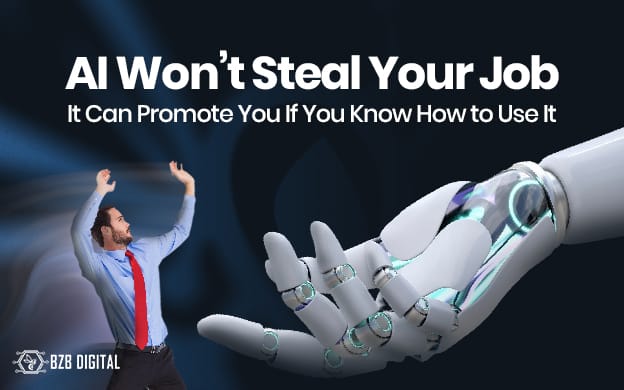
Whenever people hear “AI is coming,” they often picture robots replacing humans and mass unemployment. But in reality, AI isn’t here to steal your job it’s here to promote you. The key is knowing how to work with it instead of fearing it.
In this article, we’ll explore how AI can help you advance in your career, make your work more valuable, and open new opportunities if you use it the right way.
The Big Myth: AI as a Job Killer
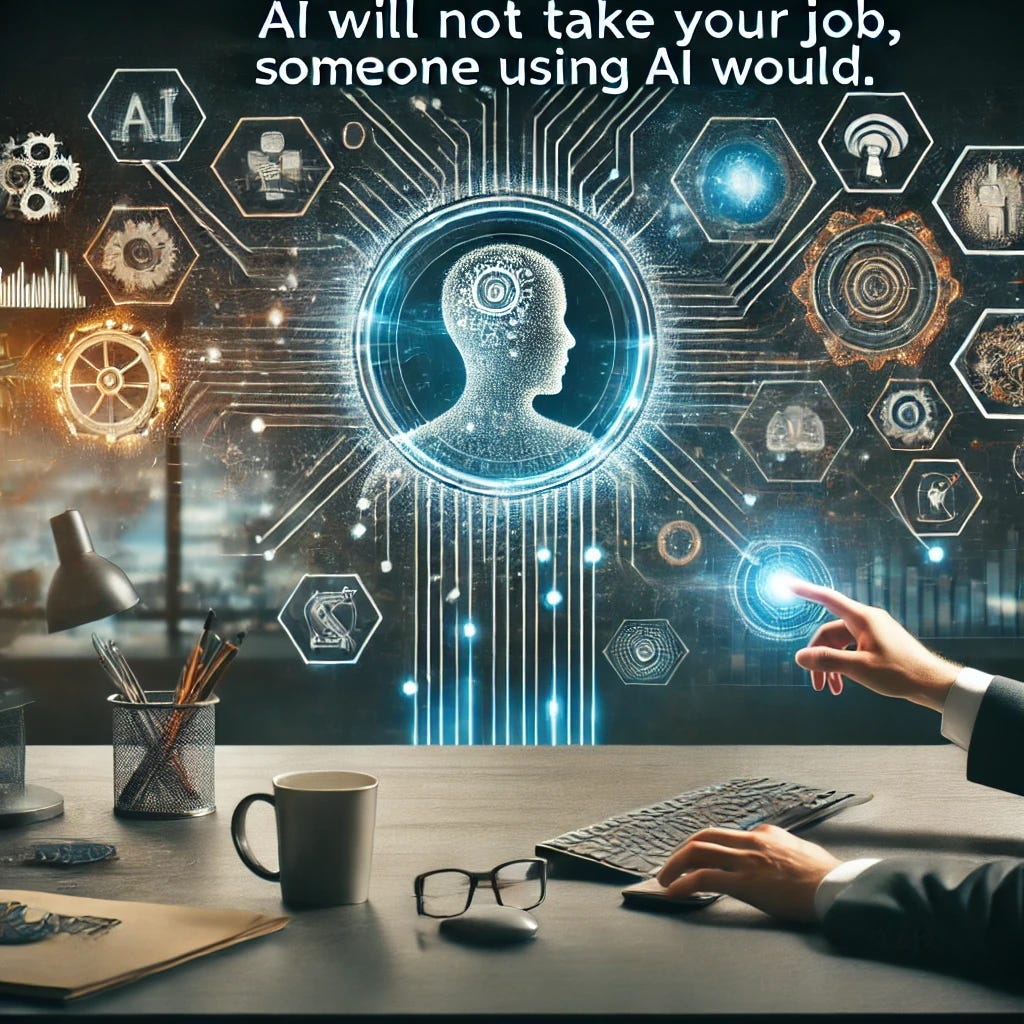
We’ve heard it for years“Automation will take over.” But history tells us a different story.
When ATMs were introduced, many thought bank tellers would vanish. Instead, banks hired more tellers to focus on customer relationships and sales, while machines handled repetitive cash transactions.
Real-life example:
In 2012, Netflix started using AI to recommend movies. Instead of firing its content team, the company expanded its staff to focus on content creation and partnerships tasks that AI couldn’t do..
The truth: AI as Your Career Accelerator
Think of AI as your personal productivity booster.
If you’re a marketer, tools like ChatGPT can draft content outlines in seconds.
If you’re a designer, Canva AI can instantly generate design concepts.
If you’re in sales, AI CRM tools can score leads so you only focus on high-potential clients.
Real-life example:
A small marketing agency in Dubai used HubSpot AI to automate follow-ups. Within 3 months, their client closing rate went up 27% without hiring extra staff.
🔗 Read more in our related blog:
https://bzbdigital.com/bzb-blog/the-rise-of-ai-powered-chatbots-are-they-replacing-human-support/
Learn Skills That Make You “AI-Proof”
The jobs most vulnerable to automation are those that are purely repetitive. The ones that thrive are creative, strategic, and human-driven.
To make yourself AI-proof:
- Learn prompt engineering (knowing how to ask AI the right questions)
- Focus on creativity and problem-solving
- Strengthen your soft skills like negotiation and leadership
example:
An HR manager used AI to shortlist candidates, but final hiring decisions still came from human judgment understanding team dynamics, personality fit, and culture.
AI Creates New Jobs We Never Imagined
When the internet boomed, jobs like “SEO Specialist” or “Social Media Manager” didn’t exist.
Today, AI has created careers such as AI Trainer, Ethics Officer, and Prompt Designer.
Real-life example:
A freelance writer in Karachi learned AI copywriting tools and now sells “AI-assisted writing” services to international clients earning 3x more than before.
🔗 Watch this in action on YouTube:
AI as a Business Growth Partner
Companies using AI for data analysis, customer service, and marketing decisions often outperform competitors.
Instead of spending days on manual reports, AI tools can deliver insights instantly, allowing leaders to act faster.
Real-life example:
A clothing brand used AI to analyze shopping patterns and launched a limited-edition product line selling out in just 48 hours.
How to Start Using AI Today
You don’t need to be a tech wizard to begin using AI in your career. Start small by experimenting with free AI tools to handle simple daily tasks from drafting emails to organizing notes. Join AI learning groups and online communities where you can exchange ideas and learn from others. Even automating just one process in your weekly workflow, like scheduling or data entry, can save time and boost efficiency. Over time, these small steps build confidence and reveal how AI can amplify your impact, making it a powerful partner in your professional growth.
Final Thoughts
AI isn’t the villain it’s the co-worker you never knew you needed. If you embrace it, learn it, and work with it, AI can become the reason you get promoted, not replaced.
The real danger? Not using AI while your competitors do.
FAQs
No. AI can generate ideas, but it lacks human emotion, empathy, and deep cultural understanding.
You can start with simple, user-friendly AI tools. The learning curve is easier than most people expect.
No. Small businesses can use AI to level the playing field, reaching audiences and optimizing operations like large corporations.